
(icono) No Borrar
SIN CATEGORíA |
 Imprimir
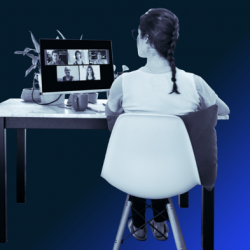 Re imaginando la oficina y vida laboral después de COVID-19Bajo el contexto en que nos encontramos hoy hemos descubierto nuevas formas de trabajo, bajo nuevos desafíos y responsabilidades. Este artículo de McKinsey profundiza en los nuevos liderazgos y los cambios de actitud en los colaboradores con el teletrabajo, una perspectiva clave para navegar y comprender mejor estos tiempos de pandemia.
The pandemic has forced the adoption of new ways of working. Organizations must reimagine their work and the role of offices in creating safe, productive, and enjoyable jobs and lives for employees. COVID-19 has brought unprecedented human and humanitarian challenges. Many companies around the world have risen to the occasion, acting swiftly to safeguard employees and migrate to a new way of working that even the most extreme business-continuity plans hadn’t envisioned. Across industries, leaders will use the lessons from this large-scale work-from-home experiment to reimagine how work is done—and what role offices should play—in creative and bold ways. Changing attitudes on the role of the office But estimates suggest that early this April, 62 percent of employed Americans worked at home during the crisis,1 compared with about 25 percent a couple of years ago. During the pandemic, many people have been surprised by how quickly and effectively technologies for videoconferencing and other forms of digital collaboration were adopted. For many, the results have been better than imagined. According to McKinsey research, 80 percent of people questioned report that they enjoy working from home. Forty-one percent say that they are more productive than they had been before and 28 percent that they are as productive. Many employees liberated from long commutes and travel have found more productive ways to spend that time, enjoyed greater flexibility in balancing their personal and professional lives, and decided that they prefer to work from home rather than the office. Many organizations think they can access new pools of talent with fewer locational constraints, adopt innovative processes to boost productivity, create an even stronger culture, and significantly reduce real-estate costs. These same organizations are looking ahead to the reopening and its challenges. Before a vaccine is available, the office experience probably won’t remain as it was before the pandemic. Many companies will require employees to wear masks But is it possible that the satisfaction and productivity people experience working from homes is the product of the social capital built up through countless hours of water-cooler conversations, meetings, and social engagements before the The reality is that both sides of the argument are probably right. Every organization and culture is different, and so are the circumstances of every individual employee. Many have enjoyed this new experience; others are fatigued by it. Sometimes, the same people have experienced different emotions and levels of happiness or unhappiness at different times. The productivity of the employees who do many kinds of jobs has increased; for others it has declined. Many forms of virtual collaboration are working well; others are not. Some people are getting mentorship and participating in casual, unplanned, and important conversations with colleagues; others are missing out. Four steps to reimagine work and workplaces We recommend that organizations take the following steps to reimagine how work is done and what the future role of the office will be. 1. Reconstruct how work is done During the lockdowns, organizations have necessarily adapted to go on collaborating and to ensure that the most important processes could be carried on remotely. Most have simply transplanted existing processes to remote work contexts, imitating what had been done before the pandemic. This has worked well for some organizations and processes, but not for others. Organizations should identify the most important processes for each major business, geography, and function, and reenvision them completely, often with involvement by employees. This effort should examine their professional-development journeys (for instance, being physically present in the office at the start and working remotely later) and the different stages of projects (such as being physically co-located for initial planning and working remotely for execution). Previously, for example, organizations may have generated ideas by convening a meeting, brainstorming on a physical or digital whiteboard, and assigning someone to refine the resulting ideas. A new process may include a period Organizations should also reflect on their values and culture and on the interactions, practices, and rituals that promote that culture. A company that focuses on developing talent, for example, should ask whether the small moments of mentorship that happen in an office can continue spontaneously in a digital world. Other practices could be reconstructed and strengthened so that the organization creates and sustains the community and culture it seeks. For both processes and cultural practices, it is all too tempting to revert to what was in place before the pandemic. To resist this temptation, organizations could start by assuming that processes will be reconstructed digitally and put the burden of proof on those who argue for a return to purely physical pre–COVID-19 legacy processes. Reimagining and reconstructing processes and practices will serve as a foundation of an improved operating model that leverages the best of both in-person and remote work. 2. Decide ‘people to work’ or ‘work to people’ In the past couple of years, the competition for talent has been fiercer than ever. At the same time, some groups of talent are less willing to relocate to their employers’ locations than they had been in the past. As organizations reconstruct how they work and identify what can be done remotely, they can make decisions about which roles must be carried out in person, and to what degree. Roles can be reclassified into employee segments by considering the value that remote working could deliver:
3. Redesign the workplace to support organizational priorities Organizations could create workspaces specifically designed to support the kinds of interactions that cannot happen remotely. If the primary purpose of an organization’s space is to accommodate specific moments of collaboration rather than individual work, for example, should 80 percent of the office be devoted to collaboration rooms? Should organizations ask all employees who work in cubicles, and rarely have to attend group meetings, to work from homes? If office space is needed only for those who cannot do so, are working spaces close to where employees live a better solution? In the office of the future, technology will play a central role in enabling employees to return to office buildings and to work safely before a vaccine becomes widely available. Organizations will need to manage which employees can come to the office, when they can enter and take their places, how often the office is cleaned, whether the airflow is sufficient, and if they are remaining sufficiently far apart as they move through the space. To maintain productivity, collaboration, and learning and to preserve the corporate culture, the boundaries between being physically in the office and out of the office must collapse. In-office videoconferencing can no longer involve a group of people staring at one another around a table while others watch from a screen on the side, without being able to participate effectively. Always-on videoconferencing, seamless in-person and remote collaboration spaces (such as virtual whiteboards), and asynchronous collaboration and working models will quickly shift from futuristic ideas to standard practice. 4. Resize the footprint creatively A transformational approach to reinventing offices will be necessary. Instead of adjusting the existing footprint incrementally, companies should take a fresh look at how much and where space is required and how it fosters desired outcomes for collaboration, productivity, culture, and the work experience. That kind of approach will also involve questioning where offices should be located. Some companies will continue to have them in big cities, which many regard as essential to attract young talent and create a sense of connection and energy. Others may abandon big-city headquarters for suburban campuses. In any case, the coming transformation will use a portfolio of space solutions: owned space, standard leases, flexible leases, flex space, co-working space, and remote work. Before the crisis, flexible space solutions held about 3 percent of the US office market. Their share had been growing at 25 percent annually for the past five years, so flexibility was already in the works. McKinsey research indicates that office-space decision makers expect the percentage of time worked in main and satellite offices to decline by 12 and 9 percent, respectively, while flex office space will hold approximately constant and work from home will increase to 27 percent of work time, from 20 percent. These changes may not only improve how work is done but also lead to savings. Rent, capital costs, facilities operations, maintenance, and management make real estate the largest cost category outside of compensation for many organizations. In our experience, it often amounts to 10 to 20 percent of total personnel-driven expenditures. While some organizations have reduced these costs by thinking through footprints—taking advantage of alternative workplace strategies and reviewing approaches to managing space—many corporate leaders have treated them largely as a given. In a post–COVID- 19 world, the potential to reduce real-estate costs could be significant. Simply getting market- comparable lease rates and negotiating competitive facilities-management contracts will not be enough. Real-estate groups should collaborate with the business and HR to redo the footprint entirely and develop fit-for-purpose space designs quickly—in some cases, by creating win–win approaches with landlords. The value at stake is significant. Over time, some organizations could reduce their real-estate costs by 30 percent. Those that shift to a fully virtual model could almost eliminate them. Both could also increase their organizational resilience and reduce their level of risk by having employees work in many different locations. Now is the time As employers around the world experiment with bringing their employees back to offices, the leadership must act now to ensure that when they return, workplaces are both productive and safe. Organizations must also use this moment to break from the inertia of the past by dispensing with suboptimal old habits and systems. A well- planned return to offices can use this moment to reinvent their role and create a better experience for talent, improve collaboration and productivity, and reduce costs. That kind of change will require transformational thinking grounded in facts. Ultimately, the aim of this reinvention will be what good companies have always wanted: a safe environment where people can enjoy their work, collaborate with their colleagues, and achieve the objectives of their organizations. Leer artículo Aquí |

|
George Anastassiousé
|
Arquitecto |
|
• Arquitecto, MBA Universidad Adolfo Ibáñez; Diplomado en Marketing UAI y Dirección de Empresas Familiares; fundador y director ejecutivo/ Alfa-Ro S.A., Idea Publicidad Ltda., Fobbia Desing S,A; director de empresas Molibdemos y Metales S.A., Interexport S.A, Mobilink S.A y presidente ejecutivo de la Fundación Gabriel y Mary Mustakis, entidad sin fines de lucro dedicada a desarrollar al máximo el potencial cultural, intelectual y creativo de los jóvenes Latinoamericanos, y en particular, chilenos. Entre sus características resalta la capacidad promotora y creadora de conceptos innovadores en las distintas áreas de su quehacer. Gran capacidad para trabajar en equipos, perseverancia y constancia para llevar adelante proyectos. |
|
|
George Anastassiousé
|
Arquitecto |
|
• Arquitecto, MBA Universidad Adolfo Ibáñez; Diplomado en Marketing UAI y Dirección de Empresas Familiares; fundador y director ejecutivo/ Alfa-Ro S.A., Idea Publicidad Ltda., Fobbia Desing S,A; director de empresas Molibdemos y Metales S.A., Interexport S.A, Mobilink S.A y presidente ejecutivo de la Fundación Gabriel y Mary Mustakis, entidad sin fines de lucro dedicada a desarrollar al máximo el potencial cultural, intelectual y creativo de los jóvenes Latinoamericanos, y en particular, chilenos. Entre sus características resalta la capacidad promotora y creadora de conceptos innovadores en las distintas áreas de su quehacer. Gran capacidad para trabajar en equipos, perseverancia y constancia para llevar adelante proyectos. |
|
|
George Anastassiousé
|
Arquitecto |
|
• Arquitecto, MBA Universidad Adolfo Ibáñez; Diplomado en Marketing UAI y Dirección de Empresas Familiares; fundador y director ejecutivo/ Alfa-Ro S.A., Idea Publicidad Ltda., Fobbia Desing S,A; director de empresas Molibdemos y Metales S.A., Interexport S.A, Mobilink S.A y presidente ejecutivo de la Fundación Gabriel y Mary Mustakis, entidad sin fines de lucro dedicada a desarrollar al máximo el potencial cultural, intelectual y creativo de los jóvenes Latinoamericanos, y en particular, chilenos. Entre sus características resalta la capacidad promotora y creadora de conceptos innovadores en las distintas áreas de su quehacer. Gran capacidad para trabajar en equipos, perseverancia y constancia para llevar adelante proyectos. |
|
|
George Anastassiousé
|
Arquitecto |
|
• Arquitecto, MBA Universidad Adolfo Ibáñez; Diplomado en Marketing UAI y Dirección de Empresas Familiares; fundador y director ejecutivo/ Alfa-Ro S.A., Idea Publicidad Ltda., Fobbia Desing S,A; director de empresas Molibdemos y Metales S.A., Interexport S.A, Mobilink S.A y presidente ejecutivo de la Fundación Gabriel y Mary Mustakis, entidad sin fines de lucro dedicada a desarrollar al máximo el potencial cultural, intelectual y creativo de los jóvenes Latinoamericanos, y en particular, chilenos. Entre sus características resalta la capacidad promotora y creadora de conceptos innovadores en las distintas áreas de su quehacer. Gran capacidad para trabajar en equipos, perseverancia y constancia para llevar adelante proyectos. |
|

|
Isabeau González
|
Subdirectora Gestión Estratégica y Nuevos Proyectos | |
|
• Experticia: Gestión y desarrollo de proyectos. • Educación: Titulada de Ingeniería Comercial con mención en Administración, Universidad Diego Portales. Titulada de Bachiller en Ciencias Sociales y Humanidades • ¿Por qué trabajas en PROhumana? Trabajar en PROhumana me ha permitido crecer tanto profesionalmente como de forma personal. Compartir con un equipo motivado y desafiante me ha permitido conocer la importancia de la RSE en la sociedad de hoy en día y la responsabilidad que tenemos como individuos el provocar cambios sustanciales para el futuro. • Intereses: Viajar y toda la experiencia que conlleva el conocer distintas culturas, me gusta practicar yoga, hacer pilates y pasar tiempo con mis amigos y familia. |
||

|
Saga Preis
|
Pasante Internacional Curso Español y Cooperación al Desarrollo Skarpnacks Folkhogskola | |
|
• Experticia: Conocimiento de herramientas para la Cooperación Internacional al Desarrollo (CID). • Educación: Curso universitario Español y Cooperación al Desarrollo en Skarpnäcks folkhögskola (Suecia) • ¿Por qué trabajas en PROhumana? Me parece lógico involucrar las empresas en la cuestión de su propia sustentabilidad, que ellas mismas se hacen cargo de su propio desarrollo sustentable. Quiero formar parte del trabajo importante que hace PROhumana. • Intereses: Cocinar, aprender nuevas cosas, tocar música. Estoy cautivada del mundo y sus habitantes. |
||

|
Consuelo Reyes
|
Consultora Asociada |
|
• Experticia: Apoyo estratégico en proyectos sistémicos. • Educación: • Titulada de Cientista Político, Universidad Diego Portales. • ¿Por qué trabaja en PROhumana? Como Cientista Político me motiva creer que como sociedad podemos volver a reconstruirnos de manera sustentable, con equidad y con ganas de dejar un mejor futuro para los que siguen. PROhumana es un espacio donde en conjunto, buscamos un desarrollo humano y sustentable. • Intereses: Viajar y explorar nuevas culturas, política y actualidad, arte, desarrollo internacional. |
|

|
Colomba Honorato
|
Consultora Asociada |
|
• Experticia: Apoyo estratégico en proyectos sistémicos. • Educación: Titulada de Ingeniería Comercial, Universidad de Los Andes. Minor en Historia del Siglo XX. • ¿Por qué trabaja en PROhumana? Trabajar en PROhumana me ha permitido entender que es posible construir una sociedad más humana. Ser parte de un equipo tan comprometido me motiva para seguir buscando maneras de generar impactos positivos para el futuro, formas de crear una sociedad más justa y preocupada por su entorno. • Intereses: Fotografía, la historia, aprender, leer y viajar. |
|